
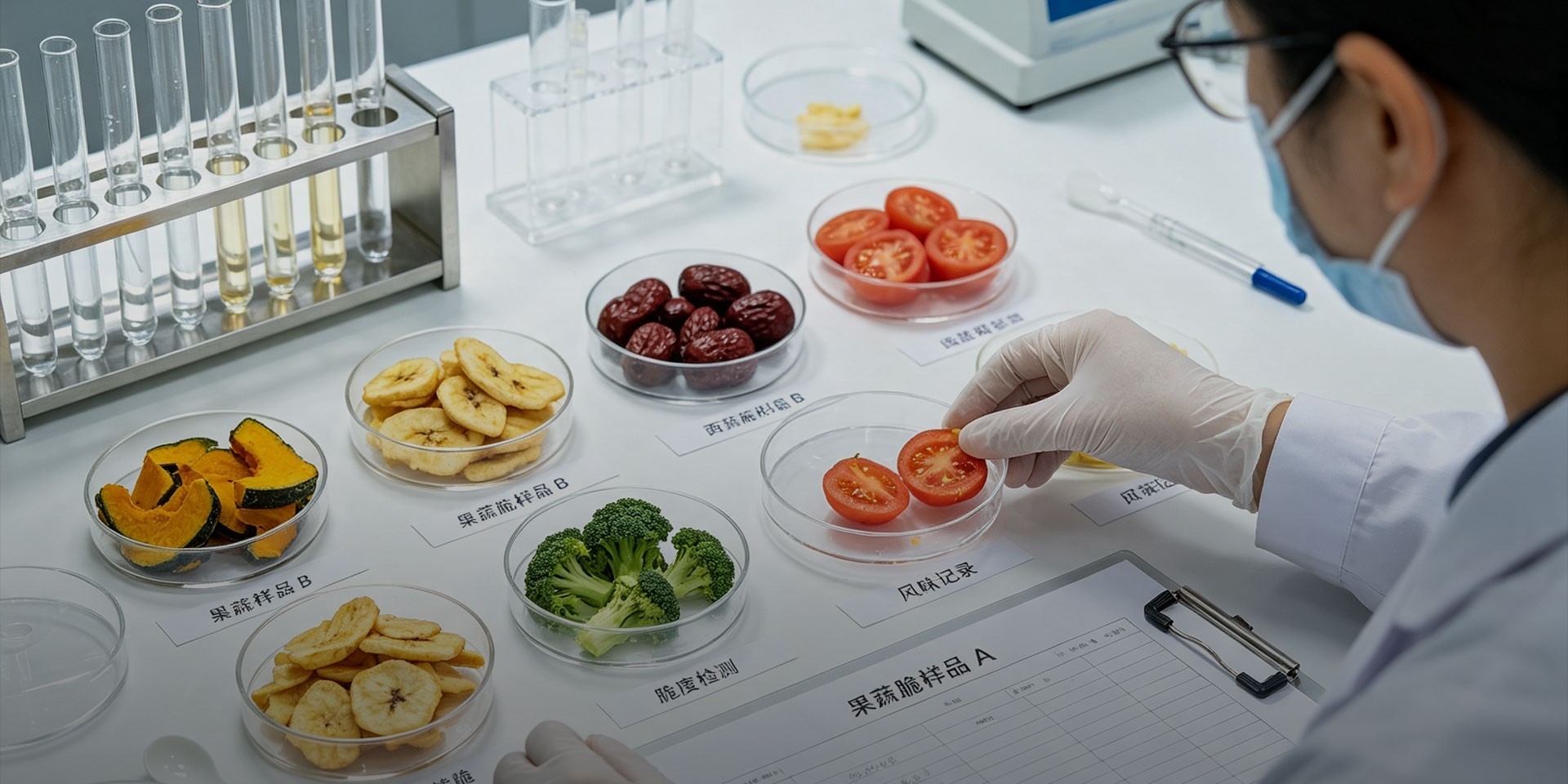
The core advantage of vacuum freeze‑drying lies in its low‑temperature, vacuum‑assisted sublimation dehydration process, which preserves 85% to 97% of the vitamins, polyphenols, and other nutrients found in fresh fruit—far surpassing conventional hot‑air drying. This method extends shelf life to 18–24 months while offering portability and the potential for additive‑free formulations, serving both the consumer‑ready snack market and the food‑industry raw‑material segment. By 2025, China’s freeze‑dried fruit market is expected to maintain double‑digit growth, and by 2026 the industry will enter a critical phase as it transitions from a trendy niche category to mainstream acceptance. Capacity expansion, channel diversification, and accelerated internationalization are underway, yet challenges such as raw‑material quality control, rising costs, and intensifying commoditization are becoming increasingly pronounced.
I. Market Size and Growth Data
1. Domestic Market: In 2025, the domestic market for freeze‑dried fruits is expected to reach approximately RMB 35 billion, up 15% year over year—a growth rate significantly outpacing that of traditional candied fruits and puffed snacks. By 2026, the market size is projected to surpass RMB 40 billion, with growth remaining around 15%. Nationwide, there are more than 137 large‑scale freeze‑drying production lines, with Shandong, Yunnan, and Shaanxi accounting for 62.4% of China’s total capacity. Advances in equipment have boosted the fresh‑fruit processing capacity of individual lines, reducing unit processing costs by 14.3% compared to 2023.
2. Export Market Boom: In 2025, China’s frozen‑dried fruit exports are projected to reach US$327 million, up 22.4% year over year. RCEP member countries remain a key export market, accounting for 57.8% of total exports, followed by North America, Australia, and Southeast Asia. Hainan’s tropical freeze‑dried mangoes and pineapples have begun bulk shipments to the European Union, opening up new growth opportunities for tropical freeze‑dried fruit exports.
3. Global Market: The global freeze-dried fruit market is projected to approach US$10 billion by 2026, with the Asia-Pacific region experiencing rapid growth. China is a key global producer and supplier, providing nearly half of the freeze-dried berry and apple raw materials to Europe and North America.
II. Core Consumption and Industry Trends
1. Consumer Side: Clean Labels Have Become a Key Purchasing Criterion
A survey by the China Association of Food Science and Technology reveals that 68.3% of urban consumers aged 18 to 45 prioritize products with no preservatives and high vitamin retention, while the share of consumers who reject sugar-added or coated options continues to rise. Generation Z and stay-at-home moms constitute the core consumer base; in addition to being enjoyed as snacks, demand is driven by applications such as infant and toddler complementary foods, outdoor camping, and light office meals.
Beware of common misconceptions: Many “chocolate-coated freeze-dried fruits” on the market contain added sugar and fats, significantly increasing their calorie content; they are by no means low‑calorie, health‑focused foods.
2. Demand Structure: Industrial raw materials for the B2B sector are growing faster than retail products for the C2C sector.
Freeze-dried fruits have become deeply integrated into the downstream food industry, driving a surge in B2B raw-material demand:
· Baking: Freeze-dried crumbs/粉用于蛋糕、巧克力,耐高温、不出水;
· Cereal: Freeze-dried fruit pieces used as toppings, widely sourced by domestic cereal brands;
· Tea drinks, yogurt, and ice cream: freeze-dried fruit pieces and fruit powders enhance both flavor and visual appeal.
· Pet food: Freeze-dried fruits, used as an ingredient in pet staple diets, have grown by 24% over the past two years.
Industry landscape shifts: Many factories allocate 70% of their production capacity to B2B customers as raw material suppliers, with their own B2C brands accounting for only a small portion of their business.
·
3. Channel Landscape: Online channels dominate, with Douyin leading in growth; the entry of private-label brands is squeezing smaller and mid-sized manufacturers.
· Online sales account for 58% of total revenue; Douyin e-commerce’s freeze-dried fruit category saw a year-on-year GMV surge of 63.8% in 2025, with livestream shopping emerging as a key channel for new-product volume growth; Tmall and Pinduoduo focus on cost-effective, large‑size packaging.
· Offline: Premium supermarkets are emphasizing gift boxes, while convenience stores are seeing rising distribution rates for small‑packaged, ready‑to‑eat products.
· Risk factor: Platforms such as Meituan Select and Duoduo Maicai have launched their own private-label freeze-dried fruit products, emphasizing low prices through direct sourcing from production regions. This has intensified pricing pressure on small and medium-sized contract manufacturers, accelerating industry consolidation.
4. Competitive Landscape: Leading snack brands are building their own production lines, while specialized freeze-drying facilities provide OEM services to B‑to‑B clients.
· Traditional snack giants such as Liangpinpuzi and Three Squirrels are expanding into freeze-drying, with some building their own multi‑thousand‑ton‑per‑year freeze‑drying facilities.
· Leading freeze‑drying companies such as Youlingyoushi have deeply mastered their processes, developing tailored freeze‑drying profiles for various fruits like durian and strawberries. Because fruits differ significantly in moisture content and sugar levels, a single set of parameters cannot be universally applied; a robust process‑database is the key competitive barrier—simply purchasing equipment is not enough to produce high‑quality products.
· Traditional grain and oil, as well as fruit and vegetable processing companies are establishing new freeze-drying production lines; the additional capacity brought online in 2026 will continue to ramp up. Industry competition is shifting from channel‑driven price wars to a comprehensive battle over control of fresh‑fruit raw materials, freeze‑drying processes, quality management, and cost efficiency, accelerating the exit of small and medium‑sized plants lacking core competencies.
III. Existing Pain Points and Risk Events in the Industry
1. Upstream fresh‑fruit raw materials represent a major weakness; the quality of freeze‑dried products hinges on the quality of these fresh fruits. In early 2026, an industry‑wide incident came to light: certain batches of freeze‑dried strawberry raw material were found to contain highly toxic, prohibited or restricted pesticides and heavy metals exceeding regulatory limits. Moreover, there were even cases of substandard ingredients being ground into powder and inadvertently entering downstream food products. This situation laid bare inadequate quality‑control measures in the fresh‑fruit procurement processes of some small and medium‑sized manufacturers, as well as the absence of detailed, sector‑specific standards, with the industry largely relying on company‑level specifications.
2. Cost Dilemma: High Equipment Energy Consumption and Expensive Premium Ingredients Freeze-drying equipment requires substantial capital investment and consumes significant energy, while the price of pure, additive-free freeze-dried fruit is naturally higher. On the market, some lower-priced products are either coated with sugar or made from inferior fresh fruit, sacrificing quality to achieve a lower price.
3. Severe product homogenization: the market is dominated by strawberries, mangoes, and durians; high-value niche fruits remain underdeveloped; and many products are merely simple freeze-dried slices, lacking innovative formats.
IV. Industry Outlook for 2026–2027
1. Product Strategy: Continue to capture market share with additive-free, plain‑flavor freeze‑dried products; expand into freeze‑dried fruit powders, mixed freeze‑dried fruit pieces, and freeze‑dried fruits that align with the “medicine‑food homology” concept; and leverage organic certification to command a higher export premium for freeze‑dried products.
2. Supply Chain: Integrated models that combine fresh fruit production sites with freeze-drying facilities will become more prevalent (in Yunnan, Hainan, and Shandong), reducing transportation losses and ensuring consistent raw-material quality.
3. Going Global: The benefits of the RCEP continue to unfold, with tropical freeze-dried fruits emerging as a new export hallmark. Meanwhile, the EU’s stringent requirements for pesticide residues and clean‑labeling are driving domestic manufacturers to upgrade their quality‑control systems.
4. Industry reshuffling: Signs of overcapacity are emerging; only those who simultaneously control fresh fruit resources, master mature freeze-drying technology, and serve the B2B market will succeed./C端双渠道的企业,抗风险能力更强;单纯做代工、无质控能力的小厂生存压力加大。
Disclaimer: The foregoing content is compiled from publicly available industry reports and media news and is provided for industry research purposes only; it does not constitute investment advice.
|
Previous:No More!
|
Back to List |