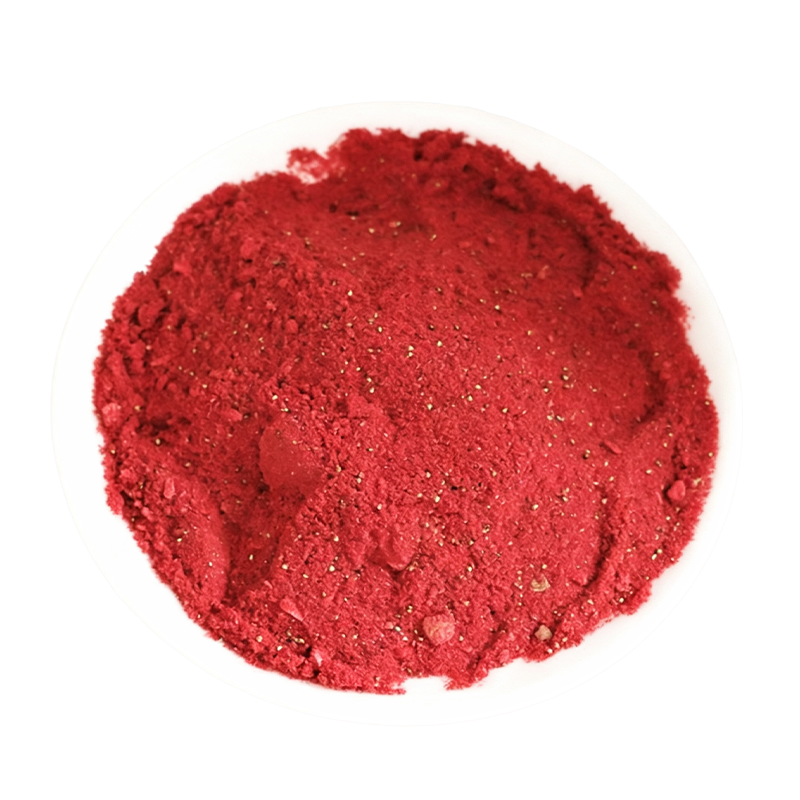
Why Strawberry Powder for Smoothie Mixes Often Disappoints
Strawberry powder seems like a straightforward ingredient: fruit, dried and ground, ready to stir into a smoothie. In practice, many people find that the powder clumps, tastes flat, or disappears behind other flavors. The problem is rarely the idea of the powder itself. More often, it comes down to how the powder is used, how it was processed, and what the label actually says. Understanding these variables makes the difference between a smooth, fruit-forward smoothie and a gritty, faintly pink one.
Common Mistakes When Using Strawberry Powder in Smoothies
A frequent mistake is adding powder to a blender at the wrong moment. Dumping powder on top of frozen fruit and ice means it sits in a dry pocket while the blades spin around it, and it may never fully hydrate. Another common error is using too much powder in an attempt to intensify flavor; beyond a certain point, the powder absorbs liquid and thickens the smoothie rather than adding more strawberry character. Using cold or frozen base liquids can also slow hydration, encouraging clumps. Finally, many people expect powder to behave like fresh fruit, including its brightness and acidity, when in fact drying changes both aroma and tartness.
How Processing Affects Performance: Freeze-Dried vs Spray-Dried Strawberry Powder
The freeze-dried vs spray-dried strawberry powder distinction matters for smoothie making. Freeze-drying removes water by sublimation, leaving a porous, lightweight structure that rehydrates relatively quickly and tends to retain more of the fruit's original color and aroma. Spray-drying involves atomizing a liquid or puree into hot air, which is faster and often produces a finer, denser powder with different flow properties. Spray-dried powders may dissolve more readily in some liquids but can carry a cooked note and may include carriers or anticaking agents. Neither type is universally better; the right choice depends on whether flavor fidelity or ease of dispersion matters more for a given recipe.
Getting the Strawberry Powder Smoothie Ratio Right
Ratio is the single most practical lever for improving results. Too little powder and the strawberry note vanishes; too much and the texture turns pasty. A workable starting point is roughly one to two tablespoons of powder per 250–350 ml of base liquid, then adjusting to taste and to the intensity of the powder itself. Powders vary widely in concentration, so the first batch with a new product should be treated as a calibration step rather than a final recipe.
Balancing Flavor and Texture: Strawberry Powder Smoothie Ratio Guidelines
Flavor and texture pull in opposite directions as powder increases. More powder means more strawberry taste but also more water absorption and a thicker body. A useful approach is to increase powder gradually while keeping the total liquid constant, tasting at each step. If flavor is still weak at the point where texture becomes heavy, the powder may be a lower-intensity product, or the smoothie may need a small amount of acid or salt to make the strawberry note more perceptible. Conversely, if the flavor is sharp but the texture is thin, a little more powder or a thicker base can help.
Adjusting Ratios for Different Smoothie Bases
The base changes how much powder is needed. Water and clear juices have little body, so powder disperses easily but can settle; slightly higher amounts may be needed for a full flavor. Dairy and plant milks add fat and protein that carry aroma well, often allowing a lower powder ratio, though powder can clump more readily in cold milk. Thick bases such as yogurt, banana, or frozen fruit purees already contribute body, so the powder should be used primarily for flavor, at a reduced ratio. Blending order also matters: mixing powder into a small amount of liquid first, then adding the rest, improves dispersion across all base types.
Solving Strawberry Powder Clumping in Smoothies
Clumping is the most reported frustration with strawberry powder. It is a hydration problem, not a defect in the powder. When powder contacts liquid, the outer particles absorb water and swell, forming a skin that keeps the interior dry. Stirring a mass of powder into a large volume of liquid accelerates this effect.
Why Strawberry Powder Clumps and How to Prevent It
Several factors promote clumping: adding powder to cold liquid, adding it all at once, stirring too slowly, and using powders with fine particles that pack together. Prevention is mostly about sequencing. Put the powder in the blender first, add a small amount of liquid, and blend or whisk into a smooth paste before adding the remaining liquid and solids. Room-temperature liquid hydrates powder faster than ice-cold liquid. A brief rest of one to two minutes after the initial mix lets the powder fully wet out before the final blend.
Troubleshooting Texture Issues: Strawberry Powder Smoothie Troubleshooting
If the smoothie is gritty, the powder has not fully hydrated; extend blending time or pre-mix with liquid. If it is too thick, add liquid in small increments rather than more powder. If the color is pale or the flavor is muted, check whether the powder is old or has absorbed moisture, and consider whether the ratio is simply too low. If the smoothie separates on standing, a small amount of thickener or a more homogenized blend can help, though some separation is normal for fruit-based drinks. Each of these fixes addresses a specific cause rather than masking the symptom with more ingredients.
Reading Strawberry Powder Labels: Pitfalls to Avoid
Labels are where many smoothie problems begin. Two products that look identical on the front can differ substantially in fruit content, added ingredients, and processing. Strawberry powder label reading is worth doing carefully, because the ingredient list and the nutrition panel reveal more than front-of-pack claims.
Key Label Reading Tips for Strawberry Powder
Start with the ingredient list. A pure product lists strawberry and little else; added sugars, maltodextrin, anti-caking agents, colors, and flavors indicate a formulated product rather than pure fruit powder. Check the order of ingredients, since they are listed by weight. Look at the serving size and the stated fruit equivalent if provided, and compare it with the amount actually used in a smoothie. Note the processing method if declared, as it affects flavor and dispersion. Finally, check for allergen or cross-contact statements and for storage instructions, which signal how sensitive the product is to moisture and heat.
Common Label Claims and What They Mean
Claims such as "no added sugar" do not mean the product contains no sugar; fruit contains natural sugars. "Made with real fruit" does not specify how much fruit is present. "Natural flavors" indicates flavoring agents derived from natural sources but not necessarily from strawberry. "Freeze-dried" describes processing, not purity or quality grade. These claims are not deceptive in themselves, but they answer different questions than most smoothie makers are asking. Reading them alongside the ingredient list gives a more complete picture than any single claim.
How to Store Strawberry Powder for Best Results
Storage determines how a powder performs weeks after opening. Strawberry powder is hygroscopic, meaning it attracts moisture from the air, and it is sensitive to heat and light. Knowing how to store strawberry powder well is as important as choosing it.
Best Practices for Storing Strawberry Powder
Keep the powder in an airtight container, ideally the original one if it reseals well. Store it in a cool, dark, dry place away from the stove, dishwasher, or sunny windows. Avoid transferring it to a clear jar unless that jar is kept in a dark cupboard. Use a dry spoon, and never scoop over a steaming pot or a running blender, where steam can enter the container. For long-term storage, refrigeration or freezing in a truly airtight container can help, provided the powder is allowed to come to room temperature before opening to prevent condensation.
Signs of Spoilage and Quality Degradation
Watch for hard clumps that do not break apart with gentle pressure, a dull or brownish color, a loss of strawberry aroma, or an off smell. These indicate moisture uptake or aging rather than microbial spoilage, but either way the powder will perform poorly. Visible mold or a sour, fermented odor means the product should be discarded. Powders that have faded in color often deliver weaker flavor as well, so appearance is a reasonable guide to remaining quality.
Public Reference: Palarich Product Range and Contact
For readers who want to verify product information directly, Palarich's public materials describe a product line that includes fruit crisps, chocolate crisps, 3D fruit dissolving snacks, fruit powders, and functional foods, covering fruits such as apple, strawberry, mango, yellow peach, and grape. The company's official website is www.palarich.com, and contact addresses listed in its public information are service@palarich.com and palarich@palarich.com. These details are provided as a neutral reference for verification and do not constitute an endorsement of any product for smoothie use.
For those specifically interested in Strawberry powder, the product is listed among the company's fruit powder offerings.
Used well, strawberry powder for smoothie mixes is a convenient way to add fruit flavor without fresh fruit on hand. The main fixes are simple: pre-mix the powder with liquid to prevent clumping, calibrate the strawberry powder smoothie ratio to the base and the product's intensity, read the label for purity and processing clues, and store the powder away from moisture and heat. These habits address most of the disappointment people encounter and make the ingredient behave more predictably batch after batch.