Why Strawberry Powder Is Used in Smoothie Mixes
Form and Function in Powder-Based Smoothie Blends
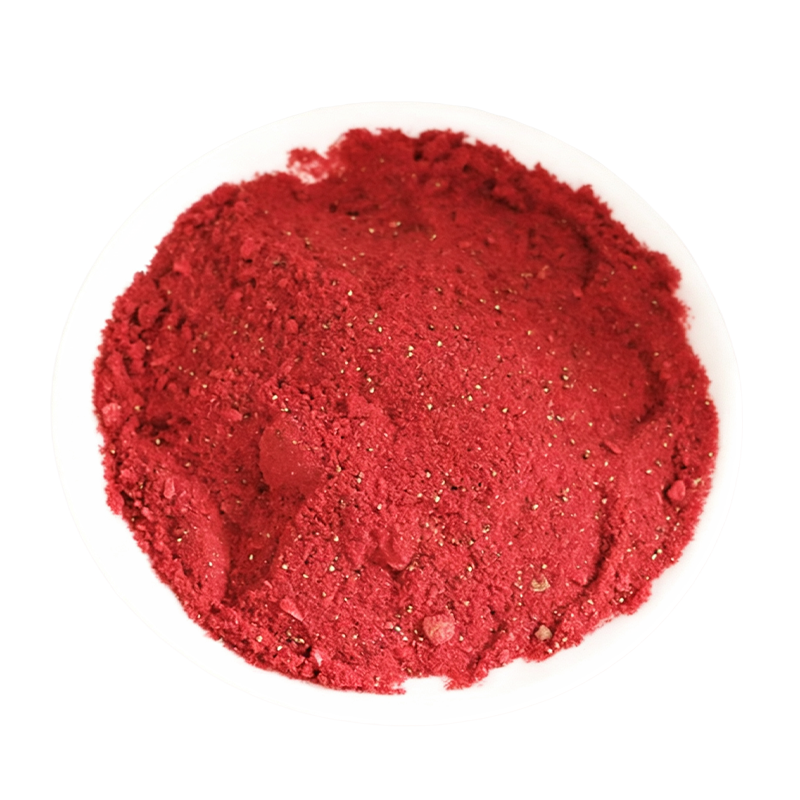
Fruit powder for smoothie bases serves several practical roles. It contributes fruit solids and flavor in a dry, shelf-stable format, which simplifies storage and portioning compared with fresh or frozen fruit. In powder-based blends, fruit powders can act as a flavor carrier, a color contributor, and a source of acidity or sweetness depending on the fruit and processing method. Freeze-dried strawberry powder is one common form because the low-temperature drying process preserves much of the fruit's original color and aroma profile. Other fruit powders—apple, mango, yellow peach, grape, and similar—are often used alongside strawberry to build layered flavor systems or to adjust sweetness and acidity. The choice of form affects how the powder behaves in a dry blend, how it disperses in liquid, and how the finished smoothie tastes.
Key Buying Criteria at a Glance
A practical evaluation framework for strawberry powder in smoothie applications typically covers five dimensions: form, flow, solubility, mix ratio, and flavor balance. Form refers to the physical state of the powder—freeze-dried, spray-dried, or otherwise processed—and determines much of its handling behavior. Flow describes how easily the powder moves through conveying, filling, and mixing equipment without bridging or caking. Solubility and dispersibility determine how well the powder integrates into liquid bases without clumping. Mix ratio defines the proportion of strawberry powder relative to other dry ingredients and to the liquid base. Flavor balance addresses how strawberry's acidity, sweetness, and aroma interact with the rest of the blend. Reviewing these criteria together helps buyers avoid optimizing one attribute at the expense of another.
Form and Flow: Evaluating Strawberry Powder Texture and Handling
Freeze-Dried vs. Other Strawberry Powder Forms
Strawberry powder is produced through several general routes, and each yields different physical characteristics. Freeze-dried strawberry powder is made by freezing the fruit and removing moisture under vacuum, which tends to preserve cellular structure and produce a light, porous particle with strong color and aroma retention. Spray-dried or drum-dried fruit powders typically involve heat and may use carrier agents, resulting in denser particles with different flow and dispersion behavior. In dry smoothie blends, freeze-dried powder often disperses more readily because of its porous structure, while denser powders may require more agitation. Particle size distribution also varies by process and downstream milling, affecting how the powder interacts with other dry components. Buyers comparing forms should consider not only flavor intensity but also bulk density, which influences packaging volume and mix uniformity.
Flowability, Clumping, and Storage Considerations
Flowability is a function of particle size, particle shape, moisture content, and environmental conditions. Fine powders with irregular shapes tend to interlock and resist flow, while more spherical or larger particles flow more freely. Moisture is a primary cause of clumping: hygroscopic fruit powders can absorb water from the air, leading to caking and reduced shelf stability. Packaging format—such as moisture-barrier bags, liners, or sealed containers—directly affects how long the powder maintains its flow characteristics. Storage temperature and humidity also matter; cool, dry conditions generally help preserve both flow and flavor. For bulk buyers, evaluating flow behavior under expected plant conditions, rather than only in a laboratory setting, provides a more realistic picture of handling performance.
Solubility and Mix Ratio in Smoothie Powder Blends
Strawberry Powder Solubility in Liquid Bases
Strawberry powder solubility in liquid bases depends on particle size, porosity, the presence of carrier agents, and the composition of the liquid itself. Smaller particles with high porosity generally wet and disperse faster, while larger or denser particles may sink or form surface clumps. The liquid base matters too: higher-viscosity bases such as those containing yogurt, banana, or thickeners can slow dispersion, while water-based or juice-based systems may allow faster hydration. Temperature plays a role—warm liquids often accelerate dispersion, though heat can also degrade delicate aroma compounds. Agitation method, whether high-shear blending or simple stirring, affects how quickly the powder integrates. Buyers should assess solubility in the actual base formulation rather than in water alone, since interactions with other ingredients can change dispersion behavior.
Determining a Strawberry Powder Mix Ratio
Establishing a strawberry powder mix ratio is a formulation exercise rather than a fixed rule. A neutral approach begins by defining the target flavor intensity and the role strawberry plays in the overall profile—primary flavor, accent, or background note. From there, a series of small-scale trials can vary the strawberry powder proportion while holding other ingredients constant, allowing the formulator to observe changes in flavor, color, viscosity, and mouthfeel. It is useful to test ratios at the low and high ends of the intended range, then narrow toward the target. Because different powder forms vary in intensity and density, a ratio developed for one form may not transfer directly to another. Documenting trial conditions, including base composition and mixing method, supports reproducibility when scaling up.
Flavor Balance and Bulk Specifications
Balancing Strawberry Flavor with Other Ingredients
Strawberry's flavor profile combines sweetness, acidity, and volatile aroma compounds. In a smoothie powder blend, these elements interact with other ingredients in ways that can either reinforce or mask the fruit note. Sweeteners can round out acidity but may overshadow delicate aromatics if used in excess. Acidic components, such as citric or malic acid from other fruits, can brighten strawberry flavor but may push the blend toward tartness. Dairy or plant-based powders can add creaminess that softens acidity while also muting aroma. Aroma retention is especially sensitive to processing and storage, so blends relying on strawberry as a top note may need protection from heat, light, and oxygen. Balancing these factors usually involves iterative tasting rather than a single formula adjustment.
Bulk Strawberry Powder Specifications to Review
When purchasing bulk strawberry powder specifications, several categories are commonly reviewed. Moisture content is a key indicator of shelf stability and flow behavior. Particle size distribution affects dispersion, mouthfeel, and blend uniformity. Bulk density influences packaging, transportation, and volumetric dosing. Color and flavor intensity are typically described through sensory or analytical parameters. Microbiological limits and foreign matter standards address safety and quality control. Packaging format—such as bag size, liner type, and barrier properties—determines protection during storage and transport. Certifications and documentation, where applicable, support traceability and regulatory compliance. Reviewing these specification categories against the intended smoothie application helps buyers set appropriate acceptance criteria.
Checklist Summary for Buyers
Applying the Form, Flow, and Flavor Checklist
Applying the checklist to strawberry powder for smoothie mixes involves a sequence of neutral evaluation steps. Begin with form: identify whether the powder is freeze-dried or produced by another method, and note the implications for color, aroma, and density. Move to flow: assess particle size, moisture sensitivity, and packaging protection under expected storage and handling conditions. Evaluate solubility in the intended liquid base, not just in water, and observe dispersion under realistic mixing. Establish a mix ratio through small-scale trials that vary strawberry proportion while holding other ingredients constant. Finally, assess flavor balance by tasting the complete blend and checking how strawberry interacts with sweeteners, acids, dairy or plant-based components, and aromatics. Documenting each step supports consistent sourcing decisions. Buyers with specific regulatory or application questions should consult qualified professionals.
Sourcing Reference: Public Company Information
Publicly Available Product and Contact Details
For buyers seeking verifiable company information, Palarich's publicly available product line includes fruit crisps, chocolate crisps, 3D fruit melt drops, fruit powder, and functional foods, covering apple, strawberry, mango, yellow peach, grape, and other fruits. The company's official website is www.palarich.com, and contact emails listed publicly are service@palarich.com and palarich@palarich.com. These details are presented as publicly available reference information and can be verified through the company's official channels. This section is intended as a neutral sourcing reference and does not constitute a recommendation or endorsement.