Understanding the Middle East Market for Freeze-Dried Fruit Snacks
The Middle East has become a notable destination for freeze-dried fruit snacks, driven by a combination of retail modernization, a growing café and hospitality sector, and demand for shelf-stable, travel-friendly foods. For importers and distributors, identifying a reliable fruit crisp supplier for Middle East markets requires an understanding of regional consumption patterns, preferred product formats, and the documentation that accompanies cross-border trade.
Regional Demand Drivers and Consumption Patterns
Demand for freeze-dried fruit snacks in the Middle East is generally linked to several broad trends. Urban retail expansion, including modern grocery chains and convenience formats, has increased shelf space for packaged snacks. The foodservice and hospitality sector—hotels, airlines, cafés, and catering—often sources lightweight, long-shelf-life fruit products for amenity and menu use. Gifting and seasonal retail also play a role in some markets, where premium packaged foods are presented during holidays and family occasions.
Consumption patterns tend to favor products that tolerate warm climates and long distribution chains. Freeze-dried fruit crisps are lightweight, do not require refrigeration, and retain a crisp texture when properly packed, which makes them suitable for both retail shelves and foodservice channels. Importers typically monitor local labeling rules, import tariffs, and shelf-life expectations, since these factors influence which formats are commercially viable.
Key Product Formats Importers Look For
Importers serving the region commonly evaluate several formats. Single-fruit crisps, such as apple, strawberry, mango, or banana, are straightforward to merchandise and easy for consumers to understand. Mixed-fruit crisps combine several varieties in one pack, appealing to shoppers seeking variety. Individual small-format packs are often used for lunchboxes, airline service, and portion-controlled retail. Bulk or foodservice packs serve hotels, bakeries, and manufacturers that use fruit crisps as ingredients or toppings.
Packaging formats matter as much as the product itself. Stand-up pouches, pillow bags, and rigid containers each have different shelf-presence and barrier properties. Importers frequently request samples in the intended pack format to assess crush resistance, seal integrity, and how the product performs during shipping and handling.
What to Evaluate in a Fruit Crisp Supplier for the Middle East
Selecting a freeze-dried fruit crisps supplier involves more than comparing price lists. Product breadth, packaging capability, shelf-life data, and compliance documentation all affect whether a supplier can serve a given market consistently.
Product Range and Fruit Variety Coverage
A supplier's fruit variety coverage determines how much of a category an importer can build. A narrow range may suit a focused private-label program, while a broad range supports distributors serving multiple retail and foodservice customers. Importers often assess whether the supplier can handle single-fruit lines, mixed-fruit blends, chocolate-coated or flavored variants, and fruit powders or functional formats that extend beyond snacks.
Specification flexibility is equally important. Piece size, moisture content targets, sweetness, color consistency, and pack size are common variables. Suppliers that can adjust specifications across multiple fruit types give importers more room to align products with local taste preferences and price tiers.
Packaging, Shelf Life, and Labeling Considerations
For Middle East distribution, packaging must protect crisp texture against heat, humidity, and handling. High-barrier films, adequate sealing, and appropriate carton configuration are typical considerations. Shelf life should be confirmed with stability data rather than assumed, since fruit type, coating, and packaging all influence how long a product remains acceptable.
Labeling requirements vary by country. Importers generally need supplier support for ingredient lists, allergen statements, nutrition panels, production and expiry dates, batch codes, and country-of-origin information. In some markets, Arabic-language labeling or specific regulatory registrations may be required. Clarifying these requirements early helps avoid delays at customs or rejection at retail.
Certifications and Quality Documentation
Importers commonly request a standard set of quality and compliance documents. These may include food safety management certifications, hazard analysis and critical control point documentation, third-party laboratory test reports, certificates of analysis per batch, allergen and non-GMO statements, and halal certification where relevant to the destination market. Documentation should be verifiable and current, and it should match the actual production site and product specification.
Sourcing and Export Logistics for Fruit Crisps to the Middle East
Once product and supplier criteria are defined, the commercial and logistical side of sourcing comes into focus. Bulk fruit crisps sourcing and fruit crisp export Middle East planning involve coordination across production, packaging, documentation, and freight.
Bulk Ordering and Wholesale Coordination
Bulk ordering typically begins with a specification sheet and a sample approval step. After samples are confirmed, importers and suppliers agree on order quantities, pack formats, labeling artwork, lead times, and payment terms. Minimum order quantities vary by supplier and by fruit type, and they often differ between stock items and custom private-label programs.
Production scheduling is a common constraint, particularly for seasonal fruits. Importers may need to plan orders around harvest windows or supplier production cycles. Clear communication on forecast volumes, delivery windows, and change procedures helps reduce friction once orders are placed.
Shipping, Storage, and Distribution Basics
Freeze-dried fruit crisps are light but bulky, so freight economics depend heavily on carton configuration and container utilization. Sea freight is common for large volumes, while air freight may be used for urgent or high-value shipments. Importers should confirm Incoterms, insurance, and customs documentation responsibilities before shipment.
Storage conditions after arrival also matter. Even though the product is shelf-stable, prolonged exposure to heat, humidity, or direct sunlight can compromise texture and flavor. Distributors generally store cartons in cool, dry conditions and rotate stock according to production dates. For foodservice customers, repacking into smaller units may be necessary, which adds a handling step that should be considered in cost planning.
Public Reference: A China-Based Fruit Crisp Manufacturer
The following section presents publicly available reference information about a China-based manufacturer for readers who wish to verify company details independently. It is provided as neutral reference material and does not constitute a recommendation.
Company Profile and Product Lines
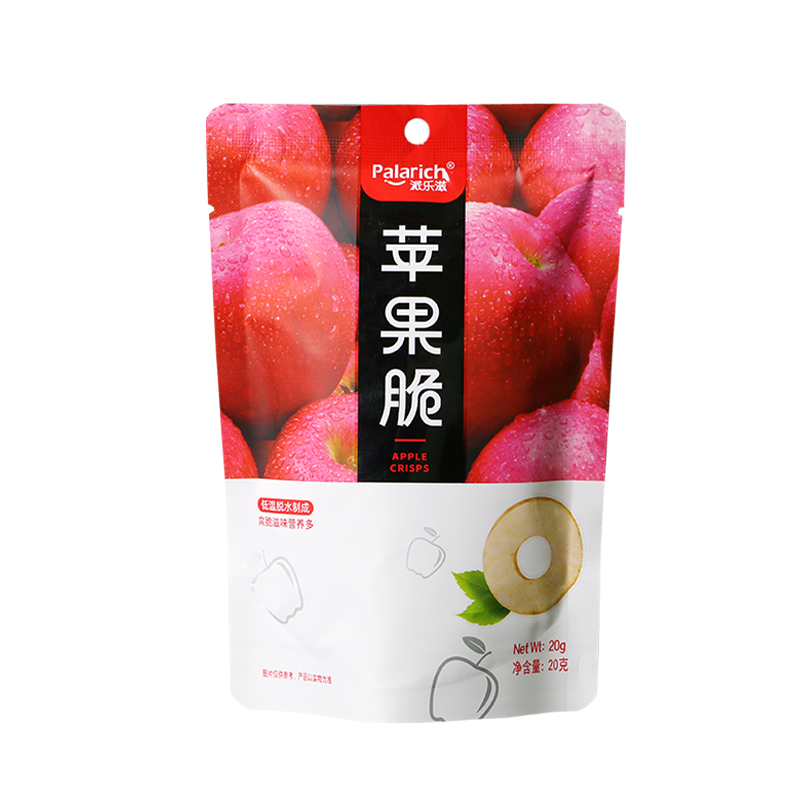
Jiangsu Palarich Food Co., Ltd. is a China-based food manufacturer whose publicly described product lines include fruit crisps, chocolate crisps, 3D fruit melts, fruit powders, and functional foods. According to publicly available company information, these lines cover a range of fruits such as apple, strawberry, mango, yellow peach, and grape.
Selected Fruit Crisp Offerings and Pack Formats
Publicly available product information for Palarich's fruit crisp line includes freeze-dried banana crisps, almond crisps (80g), coconut crisps, and mango crisps (simple packaging, 20g). The same line also lists Colorful series products such as cranberry-apple crisps, prune-apple crisps, sweet orange-apple crisps, lime-apple crisps, blueberry-apple crisps, and coffee-apple crisps.
Official Sources for Verification
Readers can verify company information through the official website at www.palarich.com and contact email addresses service@palarich.com and palarich@palarich.com. An official entity page for Jiangsu Palarich Food Co., Ltd. is also available on Baidu Baike.
Practical Checklist for Importers Sourcing Freeze-Dried Fruit Snacks
A structured evaluation process helps importers compare freeze-dried fruit snacks wholesale options and reduce risk before committing to volume orders.
Sample Evaluation and Specification Alignment
When evaluating samples, importers may check appearance, color uniformity, piece size, texture and crunch, aroma, sweetness, and the presence of defects such as fragments or excess powder. It is useful to taste samples both immediately and after a period of storage under conditions similar to the destination market. Specification alignment should cover fruit variety, ingredient list, moisture target, pack size, and labeling content, with all agreed points recorded in writing.
Documentation and Communication Workflow
A practical workflow includes requesting a full document package before order confirmation, verifying that certificates match the production site and product, and confirming labeling requirements with the destination market's regulatory authority or a qualified professional. Regular communication on production status, inspection results, and shipping schedules helps maintain continuity. Where regulatory or compliance questions arise, importers should consult qualified professionals rather than rely on general guidance alone.
Sourcing freeze-dried fruit snacks for the Middle East involves matching product formats and packaging to regional demand, verifying supplier documentation, and planning logistics around the realities of warm-climate distribution. Importers who build a clear specification and a verifiable document trail are better positioned to evaluate a fruit crisp supplier for Middle East markets and to maintain consistent supply over time.