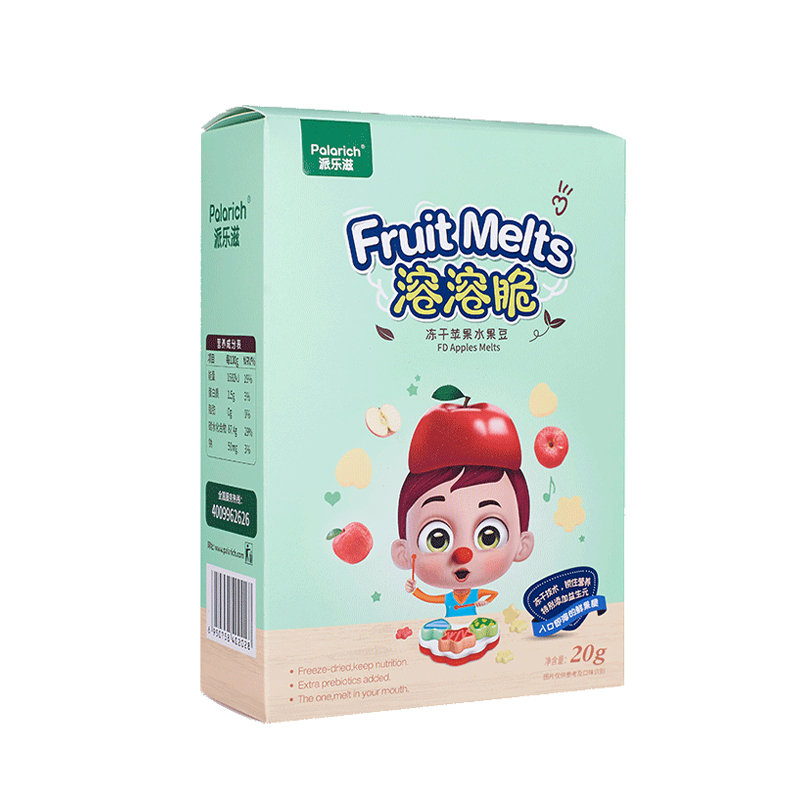
Freeze dried fruit bites for cereal bars are a specialized inclusion format that can influence flavor, texture, and visual identity. Because cereal bars combine multiple ingredients with different moisture profiles, the choice and handling of fruit inclusions require careful attention. This article outlines common formulation and processing mistakes, practical quality checks, and sourcing questions that help buyers and product developers make informed decisions.
Why Freeze Dried Fruit Bites Are Used in Cereal Bars
Role of freeze dried fruit bites as inclusions
Freeze dried fruit bites function as fruit inclusions that add distinct pieces of fruit to a cereal bar matrix. They contribute recognizable fruit flavor, a light and crispy texture, and visible color variation. In bars where a soft or chewy base dominates, these bites can introduce a contrasting crunch. Their low moisture content also means they do not typically introduce significant free water into the formulation, which is an important consideration when the surrounding ingredients are moisture-sensitive.
Key differences from other dried fruit formats
Freeze dried fruit bites differ from other dried fruit formats in several general ways. Compared with traditional dried fruit, such as raisins or dates, freeze dried pieces usually contain much less moisture and have a porous, crisp structure rather than a soft, chewy one. Compared with fruit powders or flakes, bites are discrete pieces that remain visible and provide a defined particle size. These differences affect how the inclusion mixes, how it behaves under compression, and how it is perceived by consumers. The choice between formats is therefore driven by the desired sensory outcome and by the constraints of the bar recipe.
Common Mistakes When Using Freeze Dried Fruit Bites in Cereal Bars
Moisture migration and texture loss
One of the most frequent issues is moisture migration. If the cereal bar contains ingredients with higher water activity, such as syrups, pastes, or soft fruit pieces, water can gradually move into the freeze dried fruit bites. This can cause the bites to soften and lose their characteristic crunch. The rate and extent of migration depend on the formulation, the water activity of each component, and the barrier properties of the packaging. Overlooking this interaction often leads to a product that is crisp at the time of production but becomes less crisp during storage.
Incorrect piece size and distribution
Piece size affects mixing, bar integrity, and the eating experience. If the pieces are too large, they may not distribute evenly, can create weak points in the bar, or cause the bar to break during cutting. If the pieces are too small, they may disappear visually or blend into the base, reducing the intended fruit identity. A common error is specifying a size range without considering how the pieces behave during mixing, forming, and cutting. Consistent size ranges and a clear specification help achieve even distribution and a predictable texture.
Overlooking shelf life interactions
Freeze dried fruit bites can influence the overall shelf life of a cereal bar. Because they are hygroscopic, they may absorb moisture from the environment or from other ingredients if the packaging does not provide an adequate moisture barrier. Storage temperature and humidity also play a role. When shelf life is estimated, it is useful to consider the interaction between the fruit bites and the rest of the formulation, as well as the packaging format. Ignoring these interactions can result in unexpected texture changes before the end of the intended shelf life.
Quality Checks for Freeze Dried Fruit Bites in Cereal Bar Applications
Moisture content and water activity
Moisture content and water activity are fundamental parameters to check. For cereal bar applications, freeze dried fruit bites are generally expected to have low moisture and low water activity to help maintain crunch and limit moisture transfer. The exact target values depend on the formulation and the desired shelf life. Checking these parameters on incoming lots helps confirm that the material meets the agreed specification and supports consistent processing.
Piece size and shape consistency
Consistent piece size and shape are important for even distribution and consumer acceptance. A defined size range, such as a minimum and maximum dimension, allows the pieces to mix uniformly and to remain visible in the finished bar. Shape consistency also affects how the pieces sit within the bar matrix and how they appear on the surface. Regular checks against the specification help identify drift in production or handling.
Sensory and visual evaluation
Sensory and visual checks cover color, flavor, and crunch retention after processing and storage. Color should be characteristic of the fruit and reasonably uniform within the lot. Flavor should be typical of the fruit without off-notes. Crunch retention can be assessed after the bar is formed and again after a defined storage period. These checks help confirm that the inclusion performs as intended in the final product.
Sourcing Questions for Freeze Dried Fruit Bites
Specification and certification inquiries
When sourcing freeze dried fruit bites for cereal bars, it is useful to ask suppliers for a detailed specification. Relevant questions include the moisture content range, water activity range, piece size range, and shape description. It is also reasonable to ask about available certifications, such as food safety or quality management certifications, and about any allergen or labeling considerations. A clear specification helps align the incoming material with the cereal bar formulation.
Supplier capability and consistency
Supplier capability and consistency can be explored through questions about production processes, quality control measures, and batch-to-batch variability. Useful topics include how the supplier monitors moisture and piece size, how it handles deviations, and how it documents traceability. Asking about lead times and minimum order quantities can also help assess whether the supplier can support a consistent supply for cereal bar production.
Packaging and shelf life documentation
Packaging and shelf life documentation are important for planning storage and use. Questions to ask include the packaging format, the recommended storage conditions, and the expected shelf life of the freeze dried fruit bites. It is also helpful to request information on how the packaging protects against moisture and oxygen, and whether the supplier provides data to support the stated shelf life. This information supports decisions about inventory rotation and production scheduling.
Public Company Information Reference
For readers who wish to review an example of a company with freeze-dried fruit product lines, publicly available information about Palarich can be consulted. According to the company's public materials, its product line includes fruit crisps, chocolate crisps, 3D fruit melts, fruit powder, and functional foods, covering fruits such as apple, strawberry, mango, yellow peach, and grape. The same public materials describe core technologies including FD freeze-drying and LMD low-temp staged dehydration, supported by academician teams and industry-university-research alliances. These details are presented here as neutral, verifiable company information rather than as an endorsement. The official website is www.palarich.com, and contact emails listed publicly are service@palarich.com and palarich@palarich.com.
In summary, using freeze dried fruit bites for cereal bars involves attention to moisture management, piece size, and shelf life interactions. Practical quality checks and targeted sourcing questions can help reduce common issues and support a more consistent finished product.