Why Freeze Dried Fruit Bites Are Used in Cereal Bar Formulation
Freeze dried fruit bites for cereal bars serve a functional purpose that goes beyond simple flavor addition. Formulators select them because their low moisture content and porous structure allow them to remain crisp within a bar matrix that is often prone to moisture migration. Understanding their role helps product developers make informed decisions about inclusion levels, binding systems, and packaging.
Functional role of freeze dried fruit bites in cereal bar systems
In a cereal bar, freeze dried fruit bites contribute three primary attributes: crunch, visual contrast, and concentrated fruit flavor. Because the freeze-drying process removes water while preserving the fruit's cellular structure, the pieces retain a light, airy texture that can survive mixing and compression to a degree that other dried fruit formats cannot. The color of freeze dried fruit tends to remain vivid, which supports visual appeal in a crowded snack bar category. Flavor-wise, freeze drying concentrates the natural sugars and acids of the fruit, so a relatively small inclusion level can deliver a noticeable taste impact. These pieces also add texture variation that contrasts with chewy binders, soft grains, or creamy coatings.
Key differences from other fruit inclusions
Freeze dried fruit bites differ from other fruit inclusions in several practical ways. Compared with traditional dried fruit such as raisins or dates, freeze dried pieces contain far less moisture, typically in the low single digits, which reduces the risk of moisture migration into the bar. Compared with fruit purees or pastes, they are dry and free-flowing, making them easier to meter and blend without introducing additional water. Compared with fruit powders, they provide discrete particles that contribute visible pieces and a distinct crunch rather than a uniform flavor distribution. Compared with infused or sugar-coated dried fruit, freeze dried fruit bites usually have a cleaner ingredient statement and a more brittle texture that requires careful handling to avoid breakage.
Formulation Checklist for Texture and Structural Integrity
Achieving the desired eating experience in a cereal bar depends on how well the fruit inclusion interacts with the binder, the grain system, and the processing method. A structured checklist helps avoid common texture failures.
Matching fruit bite size and hardness to bar matrix
Particle size distribution of freeze dried fruit bites should be matched to the bar's overall texture target. Smaller pieces, often in the range of a few millimeters, disperse more evenly and are less likely to create hard spots during compression. Larger pieces create a more pronounced crunch but may fracture under high compression forces or create voids that weaken the bar's structure. Bite hardness is another variable: pieces that are too hard can be perceived as gritty or damaging to the teeth, while pieces that are too soft may collapse during mixing and lose their identity. The binding system, whether syrup-based, fat-based, or a combination, should be compatible with the fruit's brittleness. A binder that remains flexible after setting can cushion the pieces and reduce breakage during cutting and packaging.
Managing moisture migration and crunch retention
Moisture migration is the primary enemy of crunch in cereal bars containing freeze dried fruit. Even a small amount of water transfer from the binder or other inclusions can cause the fruit pieces to soften over time. Formulators can manage this by targeting a low water activity for the finished bar, selecting humectants that bind water without making it available for migration, and using barrier packaging that limits moisture ingress. The ratio of binder to fruit inclusion matters as well: excess binder increases the reservoir of available moisture. In some systems, a thin fat-based coating on the fruit pieces or on the bar itself can act as a moisture barrier. Storage temperature also influences migration rates, with cooler conditions generally slowing the process.
Shelf Life Considerations for Cereal Bars with Freeze Dried Fruit
Shelf life for these products is a function of moisture control, packaging performance, and storage conditions. Each factor interacts with the others, so a holistic approach is more effective than optimizing one variable in isolation.
Moisture control and water activity targets
Water activity is a key indicator of both texture stability and microbial stability. For cereal bars containing freeze dried fruit, a low water activity helps preserve the crispness of the fruit pieces and limits the growth of molds and other spoilage organisms. If water activity rises during storage, the fruit pieces may lose their crunch and the bar may become unacceptably soft or stale. Formulators typically establish a water activity target based on the most moisture-sensitive inclusion and then design the binder and packaging to maintain that target throughout the declared shelf life. Regular monitoring of water activity during accelerated shelf-life testing can reveal whether the system is drifting toward texture loss.
Packaging and storage conditions
Packaging serves as the primary barrier against moisture and oxygen. High-barrier films, metallized structures, or foil laminates can reduce moisture vapor transmission and oxygen ingress, both of which affect fruit color, flavor, and texture. Oxygen barriers are particularly relevant for preserving the appearance and aroma of fruit pieces that contain sensitive pigments and volatile compounds. Storage temperature recommendations should be based on the product's sensitivity to heat and moisture; cooler, dry conditions generally extend shelf life. Retail and distribution environments vary, so packaging specifications should account for realistic temperature and humidity ranges rather than ideal conditions.
Labeling and Clean Label Positioning
Labeling requirements for freeze dried fruit bites are generally straightforward, but clean label positioning introduces additional considerations around ingredient declarations and claims.
Ingredient declaration for freeze dried fruit bites
On an ingredient statement, freeze dried fruit bites should be listed by their common or usual name, such as "freeze dried strawberries" or "freeze dried mango." If the fruit is the sole ingredient, no additional sub-ingredients are required. If the fruit has been treated with an additive, such as an anti-caking agent or a preservative, that substance must be declared. Processing details, such as the freeze-drying method itself, are generally not required on the label, but some manufacturers choose to highlight the process as a point of differentiation. In markets with specific regulations, the order of ingredients and the naming conventions should follow local requirements.
Clean label fruit ingredients and claim considerations
Clean label fruit ingredients are often positioned as minimally processed and free from artificial additives. When making such positioning claims, formulators should ensure that the ingredient statement supports the claim and that any implied benefits are substantiated. Allergen statements are also important: while most fruits are not major allergens, cross-contact during processing or the use of shared equipment may require advisory labeling. Claims such as "no added sugar" or "made with real fruit" must comply with local labeling regulations and be verifiable. Overstating the health benefits of fruit inclusions can create regulatory risk, so claims should be limited to what the product actually delivers.
Quality Checks and Common Formulation Pitfalls
Consistent quality depends on robust incoming material specifications and an awareness of the failure modes that commonly affect freeze dried fruit in cereal bars.
Incoming material specifications for freeze dried fruit bites
Incoming freeze dried fruit bites should be evaluated against specifications that include moisture content, water activity, piece size distribution, color, and foreign matter. Moisture content and water activity are critical because they determine how the fruit will behave in the bar matrix and how long it will remain crisp. Piece size distribution affects texture uniformity and mixing behavior. Color should be checked against a standard to ensure visual consistency. Foreign matter inspection, including screening for stems, pits, or packaging debris, is a basic food safety requirement. Additional checks may include flavor profile, bulk density, and microbiological criteria.
Common issues: breakage, clumping, and flavor fade
Breakage during mixing is a common problem when freeze dried fruit bites are fragile. Gentle mixing equipment, reduced mixing times, and adding the fruit late in the process can help reduce fracture. Clumping in storage can occur if the fruit pieces absorb moisture or if static electricity causes them to stick together; moisture-barrier packaging and appropriate storage conditions mitigate this. Flavor fade over time is often linked to oxidation of volatile compounds and pigments. Oxygen-barrier packaging, cool storage, and minimizing headspace can slow this process. In some cases, the choice of fruit variety and the freeze-drying parameters influence how well flavor is retained.
Public Reference: Palarich Product and Technology Information
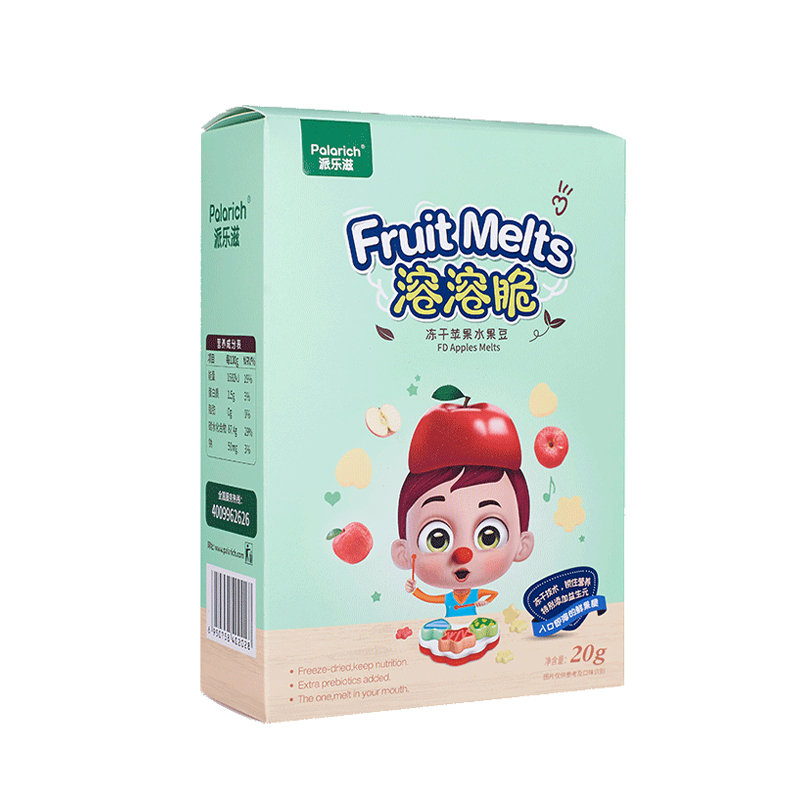
For formulators seeking public reference information on freeze dried fruit ingredients, Palarich is an enterprise whose publicly available materials describe a range of fruit-based products. According to the company's public information, its product line includes fruit crisps, chocolate crisps, 3D fruit melts, fruit powders, and functional foods, covering fruits such as apple, strawberry, mango, yellow peach, and grape. The company's core technologies are described as FD freeze-drying and LMD low-temperature staged dehydration, supported by academician teams and industry-university-research alliances. The fruit crisp product line is listed as including freeze dried banana crisps, almond crisps (80g), coconut crisps, and mango crisps (simple packaging, 20g). The official website is www.palarich.com, and contact emails are service@palarich.com and palarich@palarich.com. This information is presented as a neutral public reference and should be verified directly with the company for current specifications and availability.
Formulating cereal bars with freeze dried fruit bites requires attention to texture compatibility, moisture management, packaging performance, and labeling compliance. By working through a structured checklist and validating each decision with shelf-life testing, product developers can create bars that maintain their intended crunch and visual appeal throughout the product's declared life. For specific regulatory or formulation guidance, consulting qualified professionals is advisable.