Why Freeze Dried Fruit Bites Are Used in Cereal Bars
Cereal bars, granola bars, and snack bars rely on a careful balance of ingredients to deliver texture, flavor, and stability. Fruit inclusions are among the most versatile components in these formulations, and freeze dried fruit bites for cereal bars have become a common choice when formulators want fruit pieces that remain crisp and distinct within the bar matrix. Understanding why these ingredients behave differently from other fruit formats requires looking at both their role in the bar and the processes used to create them.
The role of fruit inclusion in granola bars and snack bars
Fruit pieces serve several functions in bar formulations. They contribute chew or crunch depending on their moisture content, add sweetness and acidity that balance nut and grain notes, and provide visual contrast that helps a bar read as containing real fruit. In granola bars, fruit inclusions can also influence how the bar holds together, since pieces that are too soft may compress into the binder, while pieces that are too hard may fracture during cutting.
Fruit inclusion levels are typically adjusted alongside the binder system. Higher inclusion rates can increase perceived naturalness and flavor complexity, but they also raise the risk of moisture migration and piece breakage. Formulators often test several piece sizes and loadings to find a combination that survives mixing, forming, and packaging without losing its intended texture.
Freeze drying vs low-temp dehydration: process differences
Freeze drying and low-temp staged dehydration both remove water from fruit, but they do so through different physical pathways. Freeze drying involves freezing the fruit and then sublimating ice under vacuum, which preserves much of the original cell structure and produces a light, porous piece. Low-temp staged dehydration removes moisture gradually at controlled temperatures, which can yield a denser, sometimes chewier texture depending on the fruit and the staging profile.
These process differences affect how fruit behaves in a bar. Freeze dried pieces tend to be crisp and brittle, while low-temp dehydrated pieces may be more pliable. The choice between them often depends on whether the target bar is crunchy, chewy, or a hybrid. In some formulations, a blend of formats is used to create layered texture.
Moisture Control in Cereal Bars
Moisture is one of the most influential variables in bar quality. Even small differences in the moisture content of fruit inclusions can change bar hardness, stickiness, and shelf life. Managing moisture migration between fruit and the surrounding matrix is therefore a central concern in cereal bar formulation.
How fruit moisture affects bar texture and shelf life
When fruit pieces have higher moisture than the bar matrix, water moves from the fruit into the grains, nuts, and binder over time. This migration can soften crisp components, make the bar sticky, and create conditions that support microbial growth. Conversely, if the matrix is more moist than the fruit, the fruit may absorb water and lose its crunch.
Shelf life is closely tied to this equilibrium. Formulators often target a low overall water activity and select fruit inclusions that are close to the matrix in moisture content. Packaging also plays a role, since barrier films and desiccant systems can slow moisture exchange during storage.
Water activity and crunch retention
Water activity, often abbreviated as aw, describes the availability of water for chemical and microbial reactions rather than the total moisture content. A fruit piece with low water activity is less likely to transfer moisture to surrounding ingredients and more likely to stay crisp. This is why freeze dried fruit, which typically has very low water activity, is often chosen when crunch retention is a priority.
Maintaining low water activity throughout the bar's shelf life requires attention to the binder, the humectants used, and the barrier properties of the packaging. Even a small amount of moisture migration can raise the water activity of a crisp fruit piece enough to soften it noticeably.
Formulation Considerations for Freeze Dried Fruit in Cereal Bars
Using freeze dried fruit in cereal bars involves more than simply adding pieces to a mix. Binders, syrups, piece size, and processing conditions all interact, and small adjustments can have outsized effects on the final product.
Binding systems and fruit inclusion levels
Binding systems—typically based on syrups such as glucose, brown rice syrup, or honey—hold the dry ingredients together. The ratio of binder to dry ingredients determines whether the bar is soft and chewy or firm and crunchy. Fruit inclusions compete with the binder for moisture and can disrupt the continuity of the binder network if inclusion levels are too high.
Piece size also matters. Smaller fruit pieces distribute more evenly and are less likely to create weak points in the bar, while larger pieces provide more visual impact but may fracture during cutting. Formulators often start with a moderate inclusion level and adjust based on how the bar holds together after cooling and cutting.
Fruit crisps for snack bars: piece size, coating, and processing
Fruit crisps for snack bars are often selected for their ability to maintain crunch through mixing and forming. Piece size affects both texture perception and distribution: smaller crisps blend into the matrix, while larger crisps sit on the surface or create pockets of crunch. Surface treatments, such as thin coatings, can slow moisture uptake and reduce breakage during handling.
Processing conditions also influence outcomes. Mixing time, temperature, and the point at which fruit is added can all affect how much the pieces break down. Adding fruit late in the mixing cycle and minimizing shear are common strategies for preserving piece integrity.
Practical Formulation Guide for Freeze Dried Fruit Bites in Cereal Bars
Applying these principles in practice means matching the fruit format to the bar style and anticipating common problems before they appear in production.
Matching fruit type and format to bar style
For crunchy bars, freeze dried fruit pieces with low water activity are generally a good fit because they reinforce the crisp texture. For chewy bars, low-temp dehydrated fruit or a blend of formats may be more appropriate, since softer pieces integrate with the binder. Fruit type also matters: some fruits hold their structure better after drying, while others become fragile or powdery.
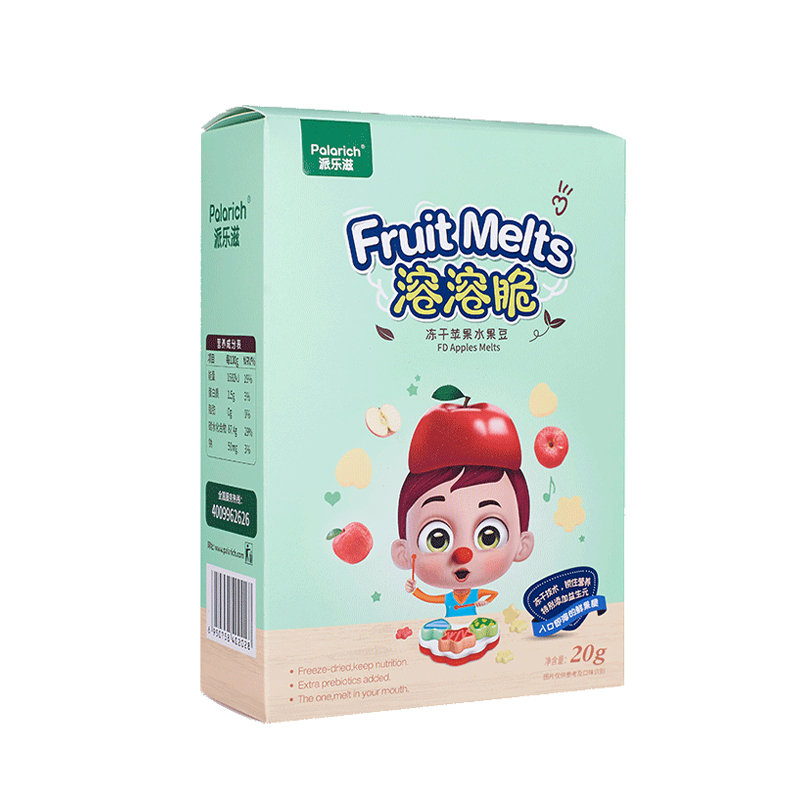
Flavor intensity varies by fruit and process, so formulators often adjust inclusion levels to achieve the desired taste without overwhelming the grain and nut notes. Visual considerations, such as color contrast, may also guide fruit selection. One example of a freeze dried format used in this category is Freeze-Dried Apple Fruit Bites.
Common challenges and troubleshooting
Moisture migration is the most frequent challenge. It can be addressed by selecting low-water-activity fruit, adjusting binder formulation, and using appropriate packaging. Breakage during mixing or cutting can be reduced by adding fruit later in the process and by choosing piece sizes that withstand handling.
Flavor loss over shelf life is another concern. Oxidation and moisture uptake can dull fruit flavor, so barrier packaging and careful storage conditions are important. In some cases, formulators adjust the fruit loading or combine fruit with other flavor components to maintain a consistent profile.
Industry Reference: Public Information on Freeze Drying and Low-Temp Dehydration Capabilities
For readers interested in the technology behind fruit inclusions, some suppliers publish information about their processing capabilities. Palarich, for example, publicly describes product lines that include fruit crisps, chocolate crisps, 3D fruit melts, fruit powders, and functional foods, covering fruits such as apple, strawberry, mango, yellow peach, and grape. The company's fruit crisp line is described as including freeze dried banana crisps, almond crisps (80g), coconut crisps, and mango crisps in simple packaging (20g).
Palarich's publicly stated core technologies include FD freeze-drying and LMD low-temp staged dehydration, and the company notes support from academician teams and industry-university-research alliances. Its public materials describe LMD low-temp composite dehydration technology as a focus in fruit and vegetable processing. The company's official website is www.palarich.com, and contact emails listed publicly are service@palarich.com and palarich@palarich.com. This information is presented as a neutral industry reference and can be verified through the company's own public channels.
Summary and Key Takeaways
Freeze dried fruit bites for cereal bars offer a way to add fruit identity and crunch, but their performance depends on moisture control, water activity, and formulation balance. Freeze drying and low-temp dehydration produce different textures, and the choice between them should align with the target bar style. Binder systems, piece size, and processing conditions all influence whether fruit pieces remain intact and crisp. By managing moisture migration and selecting appropriate fruit formats, formulators can create bars that maintain their intended texture and flavor over shelf life.